Contents

Eurostar: All You Need to Know

Quick Information


Book your Eurostar tickets

Eurostar Ticket: Between London St Pancras International Station and Paris Gare du Nord
2 hr 30 min
Transfers included
More details

Eurostar in a nutshell

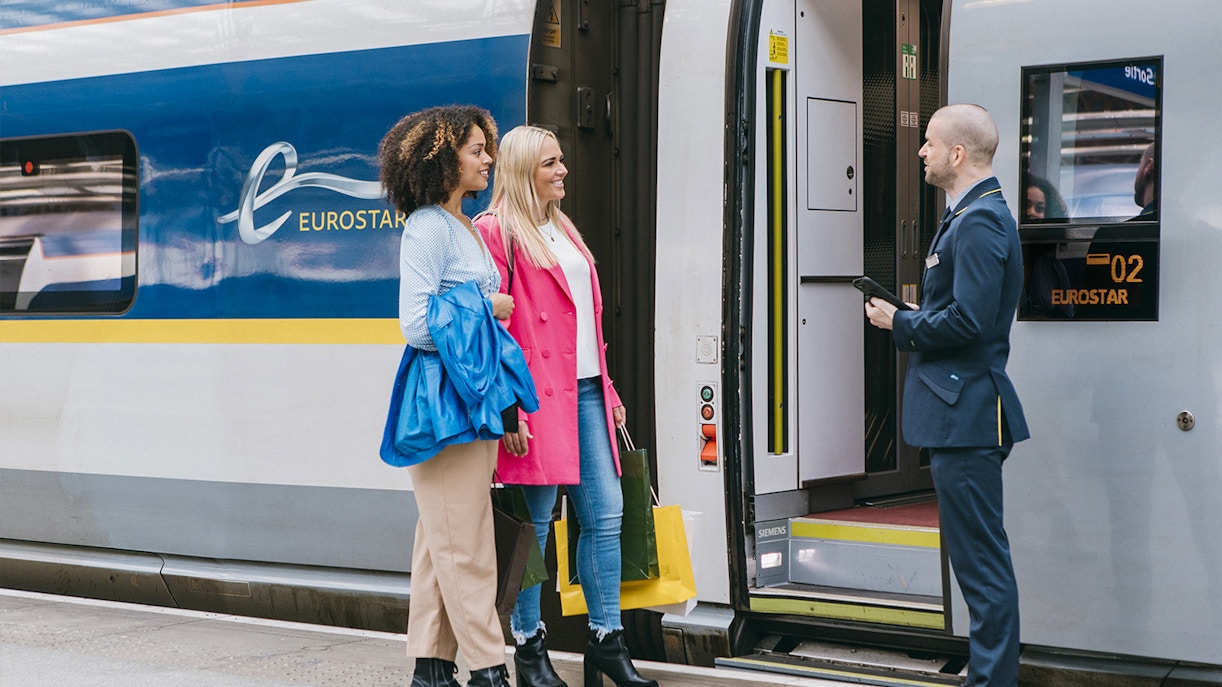
Travellers boarding Eurostar train with Interrail Global Pass.

Here are all the basic details you need to know about the Eurostar at a glance.
  • Destinations: London & Paris
  • Frequency: Every 30 to 60 minutes
  • Duration: 20 hours 20 minutes
  • Distance: 342 km (212 miles)
  • Average speed: 215 km/h (134 mph)
  • Stops: London & Paris 
  • Seat types: Standard seats

Why travel between Paris and London aboard the Eurostar

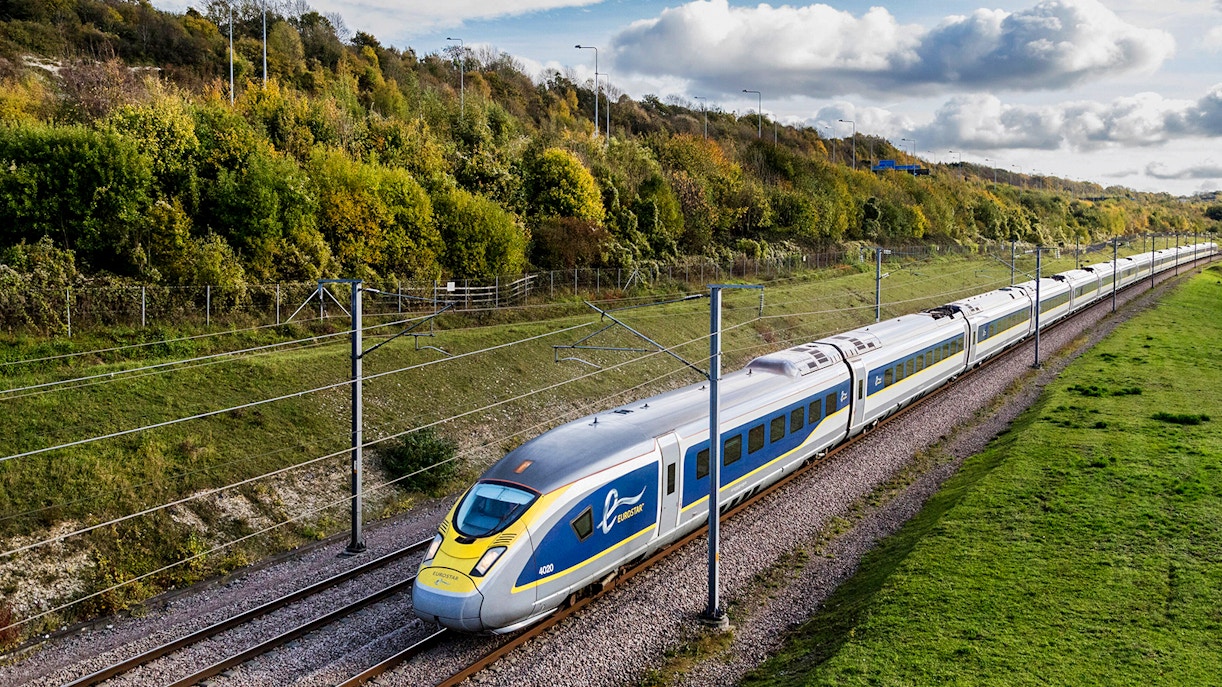
Eurostar train traveling through countryside, Eurail Pass experience.
  • Speedy travel: Zip from London St Pancras to Paris Gare du Nord in a little over two hours. There will be no airport transfers or long queues, only smooth, city-centre-to-city-centre convenience.
  • Comfortable onboard experience: Settle into roomy seats, enjoy generous luggage space, stretch your legs, and relax with onboard Wi-Fi and catering options available.
  • A seamless, stress-free ride: Border checks happen before boarding, so once you’re on the train, you can properly unwind. The ride is turbulence-free and doesn’t need you to scramble for your documents when security comes around. Sit back and enjoy a calm ride under the Channel.
  • Gorgeous views: After leaving the Channel Tunnel, you’ll glide past pretty French fields and charming small towns, which make for a little scenic treat before you arrive in Paris.
  • A more eco-friendly choice: Traveling aboard the Eurostar produces far fewer emissions than flying, making it a greener, smarter way to travel between two iconic capitals.

Eurostar: A seasonal guide

English countryside view of Sevenoaks during spring, Kent, UK

Spring

In spring, you’ll depart London’s grand station and soon move into green-tinged outskirts that gradually open into Kent’s bright fields. As you cross into France, budding trees line the high-speed track and small villages awaken with bright colour. The landscape feels fresh and lively, perfect for sipping a coffee and watching life bloom outside your window as you glide towards Paris.

Lavender flowers blooming field, house and tree. Provence, France

Summer

During summer, the countryside outside is bursting with life: golden wheat fields, dense green hedgerows, and bright skies overhead. You’ll flash through villages and shimmering sunlight on rooftops as you pull through the high-speed stretch. Even though there isn’t much to see while in the tunnel beneath the Channel, the British and French countrysides feel wide open, vibrant, and full of warmth.

French autumn landscape

Autumn

Autumn brings a palette shift: rust-coloured leaves and mellow tones dominate the scenes of northeastern England and northern France. Trees by the track turn amber, fields lie fallow, and the light gets softer. From your seat, you’ll enjoy a subtly cinematic ride, where the countryside seems to gently slow down and invite you into the seasonal mood before you arrive in Paris ready to explore.

French Alps winter

Winter

In winter, the views outside your window take on a crisp, clear tone, with bare trees, frosted fields, and even distant low-lying mist in the early part of your journey. The train’s warmth contrasts with the chilly world outside, making your smooth ride feel especially snug. Even the tunnel under the Channel feels like a cozy pause before you emerge into the sharp clarity of wintry France and head into Paris with fresh energy.

A brief history of Eurostar

  • 1980s: In the mid-1980s, the concept of linking the UK and continental Europe by high-speed rail through the Channel Tunnel began to take serious shape.
  • 1998: In 1988, construction work commenced on the ambitious Channel Tunnel and other associated rail infrastructure.
  • 1994: On 14 November 1994, Eurostar launched its first commercial passenger services between London, Paris, and Brussels.
  • 2003: By 2003, the first section of Britain’s dedicated high-speed line (now known as HS1) opened, shortening journey times between London and Paris.
  • 2007: In 2007, the London Eurostar terminus moved to the newly renovated St Pancras International station, improving connectivity between the two cities.
  • 2010s: Through the 2010s, Eurostar expanded its destinations and modernised its trains to serve more of Europe.
  • 2023: In October 2023, Eurostar merged with Thalys to form a unified network of high-speed services across six countries.
  • Now: Today, Eurostar continues to lead in sustainable and fast international rail travel between the UK and mainland Europe.

Frequently asked questions about Eurostar

Are there food and beverage options aboard the Eurostar?

Yes, there are. However, a standard ticket does not offer you free access to meals aboard the Eurostar. You will have to pay for your food and beverages out of pocket.

Can I ride between London and Paris on the Eurostar for free if I have a Eurail or Interrail Pass?

If you have a Eurail or Interrail pass, you don’t have to pay for the Eurostar fare between London and Paris. However, you will have to book a seat in advance and pay the seat reservation fee.

How much luggage can I carry on the Eurostar ride between London and Paris?

You can carry up to two regular-sized suitcases and one hang luggage on the ride between London and Paris.

Can wheelchair users ride the Eurostar between London and Paris?

Yes, you can. The trains are wheelchair-accessible. However, we recommend contacting the operator at least 24 hours in advance to ensure they can seamlessly accommodate your needs.

Are pets welcome on the Eurostar?

No, your pets cannot travel on the Eurostar. Your guide dogs, on the other hand, are welcome, provided you carry relevant documentation and notify your operator at least 24 hours in advance of your journey.